IoT Development Services USA
clickmasters provides end-to-end IoT development services in the USA for businesses building connected products, intelligent devices and data-driven digital systems. We develop the software layers that connect physical devices with cloud platforms, backend systems, mobile and web applications, analytics and existing business technology.
As an IoT development company, clickmasters can support projects from early requirements and architecture through device integration, embedded software, application development, testing, deployment and ongoing maintenance.
Our IoT capabilities form part of our broader custom application development services, allowing us to build connected applications around specific devices, workflows, users and operational requirements rather than generic software templates.
Whether you are developing a new connected product, integrating existing hardware, creating an IoT monitoring platform or modernizing an existing system, our IoT development agency can help build the software ecosystem required to connect the physical and digital parts of your solution.
IoT Development Company for USA Businesses
IoT development brings physical devices and software together so businesses can collect data, monitor equipment, automate processes and remotely interact with connected products.
As an IoT development company serving businesses across the USA, clickmasters helps organizations build connected solutions around:
The correct IoT architecture depends on the device, connectivity requirements, data volumes, operating environment, security requirements and the applications that will consume or act on the information.
What Are IoT Development Services?
IoT development services cover the design, engineering, integration, deployment and maintenance of software systems that connect physical devices with digital applications and infrastructure.
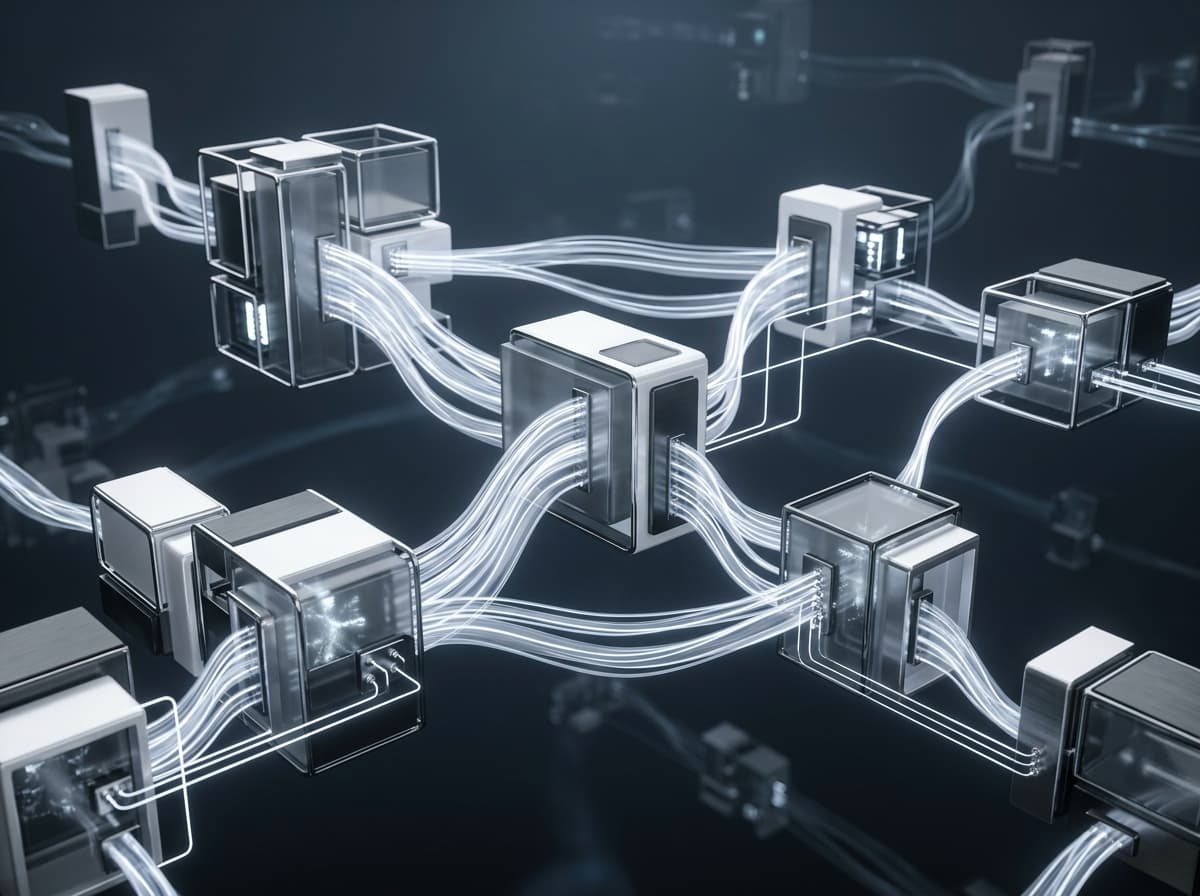
A typical IoT system can include several interconnected layers:
Physical Device → Embedded Software → Connectivity → Gateway or Edge → Cloud → Backend → Application → Analytics → Business System
Professional IoT development can therefore involve much more than building a mobile interface.
Depending on project requirements, IoT development may include:
clickmasters brings these components together through a coordinated IoT development agency approach.
Our IoT Development Services
IoT Consulting and Architecture
Successful IoT development starts with understanding how the entire connected system needs to operate.
Before engineering begins, we can help define:
The objective is to create a clear architecture before individual technologies are selected.
IoT Application Development
Our IoT application development services cover the user-facing and operational software required to interact with connected devices.
Applications can provide functionality such as:
IoT applications may be delivered through web, mobile or desktop environments according to the users and operational requirements involved.
Embedded Software Development
Connected hardware often requires software operating directly on the device.
Our embedded software development services support IoT products that need software tightly integrated with sensors, processors, controllers and other hardware components.
Embedded development can support:
Embedded software is an important link between the physical device and the wider IoT application ecosystem.
IoT Device Integration
Existing devices do not automatically become useful IoT assets simply because they can produce data.
Device integration establishes how physical equipment exchanges information with gateways, applications and backend systems.
Depending on the technical environment, integration can involve:
The integration architecture should account for reliability, connectivity, device identification and the format of the data being exchanged.
IoT Connectivity Development
Connectivity determines how devices communicate with nearby systems, gateways, applications or cloud infrastructure.
Different IoT environments can require different technologies.
Potential connectivity approaches can include:
Technology should be selected according to factors such as:
A battery-powered sensor sending small telemetry messages has different connectivity requirements from industrial equipment continuously exchanging operational data.
IoT Gateway and Edge Development
Not every IoT workload should send all raw data directly to the cloud.
Gateways and edge systems can process information closer to where it is generated.
Edge processing can be useful where a connected solution requires:
A typical architecture may operate as: Device → Edge or Gateway → Cloud → Application. The amount of processing performed at each layer depends on the use case.
IoT Cloud and Backend Development
Cloud and backend infrastructure provides the digital foundation for many connected-device ecosystems.
The backend can be responsible for:
Depending on requirements, an IoT solution may use cloud services from platforms such as AWS or Microsoft Azure, custom cloud infrastructure or a combination of managed and purpose-built components. The cloud architecture should reflect expected device volume, message frequency, data retention, reliability and operating cost.
IoT Device Management
Developing the first device connection is only part of the IoT lifecycle.
Production systems may need to manage hundreds or thousands of connected devices over time.
Device management can include:
Device lifecycle management becomes increasingly important as the number of deployed devices grows.
IoT Mobile App Development
Mobile applications can give customers, employees and operators convenient access to connected devices.
An IoT mobile application can support:
Where mobile access is central to the product, our mobile app development services can support the wider application requirements.
IoT Web Dashboard Development
Web dashboards provide centralized visibility into devices, users and IoT-generated data.
A dashboard can include:
Web interfaces are particularly useful for operations teams managing larger groups of connected devices. Our web application development services can support more complex browser-based IoT platforms.
How an IoT Application Works
A useful way to understand IoT architecture is to follow the flow of information.
1. Device or Sensor
A physical device detects an event, measurement or operational condition.
2. Embedded Software
Software running on the device interprets hardware input and determines what information needs to be transmitted.
3. Connectivity
The device communicates through an appropriate protocol or network.
4. Gateway or Edge Layer
Where required, a gateway can aggregate, filter or process device information locally.
5. Cloud and Backend
Backend services receive and process device data, apply business logic and store required information.
6. Application
A web, mobile or desktop application allows users to monitor or control the system.
7. Analytics and Automation
IoT data can be used to create reports, trigger alerts, automate actions or support analytical models.
8. Business Integration
Information can then flow into CRM, ERP, maintenance, logistics or other enterprise systems.
This creates the complete relationship:
Physical World → Connected Device → Software → Data → Business Action
IoT API and System Integration
IoT solutions become more valuable when connected-device data can be used by the rest of the organization.
Our API development services can support integration between IoT systems and:
The objective is to prevent valuable IoT information from becoming isolated inside a separate platform.
Real-Time IoT Data Processing
Many IoT use cases depend on information being processed soon after it is generated.
Real-time or near-real-time processing can support:
The appropriate architecture depends on the volume of incoming information, required response time and the actions the system needs to perform.
IoT Analytics and Business Intelligence
Collecting device data alone does not create business value.
Information needs to be processed and presented in a form that supports decisions or automation.
IoT analytics can help organizations identify:
Our data analytics services can support projects where connected-device data needs deeper analysis.
AI and IoT Development
Artificial intelligence and IoT solve different parts of a connected system.
IoT connects devices and collects information from the physical world.
AI can analyze that information and support predictions, classifications or automated decisions.
Together, AI and IoT can support use cases such as:
For solutions requiring more advanced intelligence, our AI application development services can support the AI layer of the system.
AI does not replace IoT. It can increase the value of the data generated by connected devices.
IoT Security Development
IoT security needs to protect multiple parts of the system.
Unlike a conventional application, an IoT ecosystem can include physical devices, communications, cloud infrastructure, APIs, applications and business data.
Security considerations can include:
Device Security
Communication Security
Cloud Security
API Security
Application Security
Security requirements should be defined according to the devices, data, users, industry and deployment environment involved.
Over-the-Air Updates and Device Lifecycle
Connected devices can remain deployed for years. The software and firmware operating those devices may need to evolve throughout that period.
Where technically appropriate, update capabilities can support:
The update mechanism should account for:
Lifecycle planning is especially important for large IoT fleets because manually updating every device may not be practical.
IoT Testing and Quality Assurance
IoT quality assurance extends beyond testing an application interface.
The complete system may require validation across:
Testing should also consider real-world scenarios such as:
Scalable IoT Architecture
A successful prototype may involve only a handful of devices. A production IoT platform can involve hundreds, thousands or significantly more connected endpoints.
Architecture therefore needs to consider:
Scalability should be planned around realistic growth rather than adding unnecessary infrastructure before it is required.
IoT Development Technologies
IoT systems usually involve several technology layers.
Rather than selecting technology from a generic stack, clickmasters evaluates what each part of the connected ecosystem needs to accomplish.
Device and Embedded Layer
Technologies can include C, C++ and embedded development environments where suitable.
Connectivity Layer
Potential technologies include MQTT, HTTP, WebSockets, BLE, Zigbee, Matter and other protocols according to device requirements.
Backend Layer
Backend development can involve technologies such as Python, JavaScript, Java and appropriate frameworks.
Cloud Layer
Projects can use suitable cloud and IoT infrastructure, including managed services available through platforms such as AWS and Azure.
Application Layer
Web, mobile and desktop technologies are selected according to how users need to interact with the IoT ecosystem.
The technology architecture should support the device and business requirements rather than dictate them.
IoT Solutions We Can Develop
IoT technology can be used wherever connected devices provide meaningful operational or customer value.
Examples include:
Remote Monitoring Systems
Track device, equipment or environmental information without requiring continuous physical inspection.
Asset Tracking Applications
Monitor the location or condition of valuable equipment and inventory.
Connected Product Applications
Give customers mobile or web interfaces for interacting with physical products.
Equipment Monitoring
Collect operational data that helps teams understand equipment status and performance.
Smart Building Applications
Connect environmental, access, energy and facility systems through centralized software.
Fleet and Logistics Monitoring
Collect vehicle, asset or shipment information for operational visibility.
Energy Monitoring
Track consumption, device performance or environmental information.
Industrial IoT Applications
Connect equipment and operational systems for monitoring, automation and process improvement.
IoT Development Across Industries
Our IoT development services can support connected-product and operational requirements across industries such as:
The architecture should reflect the industry environment rather than applying one IoT template to every project.
Different industries can have significantly different requirements around connectivity, reliability, data, security and device lifecycle.
Our IoT Development Process
As an IoT development agency, clickmasters follows a structured approach from concept through production.
1. Discovery
We identify:
2. IoT Architecture
We define how the device, connectivity, edge, cloud, backend and application components should interact.
3. Proof of Concept
Where appropriate, an IoT proof of concept can validate key technical assumptions before wider development.
4. Embedded and Device Integration
Connected-device software and communication layers are implemented according to the hardware environment.
5. Cloud and Backend Development
Backend systems are developed to receive, process, manage and expose IoT-generated information.
6. Application Development
Mobile applications, dashboards or other user interfaces are developed around the required workflows.
7. Integration
The IoT platform is connected with relevant business systems and third-party services.
8. Security and Testing
Each important layer is validated according to project requirements.
9. Deployment
The complete IoT ecosystem is prepared for production use.
10. Monitoring and Maintenance
clickmasters can continue supporting applications, integrations and connected software after launch.
IoT Proof of Concept to Production
IoT development often benefits from validating the highest-risk assumptions before committing to full-scale production.
A typical path may look like:
Discovery → Architecture → Proof of Concept → MVP → Production → Scale
A PoC can help answer questions such as:
Once those assumptions have been validated, development can expand into a production-ready platform.
How Long Does IoT Development Take?
IoT development timelines depend on:
An application using established hardware can generally progress differently from a project that requires new device engineering and complex embedded development.
For this reason, clickmasters structures IoT development into defined phases rather than treating the complete system as one undivided project.
IoT Development Services for USA Businesses
clickmasters provides IoT development services for businesses across the USA, supporting startups, product companies, SMBs and enterprises developing connected software and digital products.
Our delivery model can support organizations that need to:
Our IoT development company approach combines application engineering with the wider software architecture required by connected devices.
Why Choose clickmasters as Your IoT Development Company?
End-to-End IoT Development
We consider the complete connected system rather than focusing only on the mobile or web interface.
Custom Application Expertise
IoT development is connected directly with our custom application development services, allowing applications to be designed around specific device and business requirements.
Embedded Software Capabilities
Our related embedded software development services support software operating closer to the hardware layer.
Application Development Across Platforms
clickmasters can support the mobile, web and desktop interfaces used to monitor and control connected systems.
Integration-Focused Engineering
IoT applications can connect with APIs, databases, ERP systems, CRM platforms and other technology environments.
Data and AI Capabilities
Connected-device information can be combined with analytics or AI where those technologies create practical value.
Full Development Lifecycle
Our IoT development agency can support architecture, development, testing, deployment and continued maintenance.
Scalable Approach
We consider future device counts, data volumes and operational requirements when planning the architecture.
Start Your IoT Development Project
Whether you are developing a connected product, integrating existing devices, building a monitoring platform or creating an IoT ecosystem from the ground up, clickmasters can help define how the device, cloud, software and data layers should work together.
Our IoT development services in the USA support projects from early architecture and proof of concept through application development, integration, testing, deployment and continued support.
Frequently Asked Questions About IoT Development
What are IoT development services?
IoT development services cover the design, engineering, integration, deployment and maintenance of systems that connect physical devices with embedded software, connectivity, cloud infrastructure, backend services and mobile or web applications.
Is clickmasters an IoT development company serving the USA?
Yes. clickmasters provides IoT development services for businesses across the USA, supporting connected applications, device integration, embedded software, cloud systems, dashboards, mobile applications and related development requirements.
What does an IoT development agency do?
An IoT development agency helps design and build the software ecosystem required to connect physical devices with applications and digital infrastructure. Services can include architecture, embedded development, connectivity, cloud engineering, application development, integration, testing and maintenance.
What is IoT application development?
IoT application development is the process of building software that allows users and business systems to interact with connected devices. These applications can provide monitoring, control, configuration, alerts, analytics and other device-related functionality.
Can clickmasters develop embedded software for IoT devices?
Yes. Embedded software requirements can be supported through clickmasters' dedicated embedded software development capabilities where the project requires software operating directly on connected hardware.
Can an IoT application connect to existing hardware?
Yes, where the device provides suitable technical interfaces. The integration approach depends on the hardware, firmware, connectivity and communication methods supported by the device.
Which communication technologies are used in IoT?
IoT systems can use technologies such as MQTT, HTTP, WebSockets, Bluetooth Low Energy, Wi-Fi, Zigbee, Matter, LoRaWAN and cellular connectivity. The correct option depends on power, range, data volume, latency and environment.
Can IoT applications use cloud platforms?
Yes. IoT applications commonly use cloud infrastructure for device communication, data storage, processing, APIs, device management and application services.
How much does IoT development cost in the USA?
Cost depends on hardware, embedded software, connectivity, cloud infrastructure, applications, integrations, analytics, security, testing and the expected scale of the device fleet. Defining the IoT architecture is necessary before producing a reliable estimate.
How long does IoT development take?
The timeline depends on hardware readiness, software complexity, connectivity, integrations, application requirements and testing. Projects involving new hardware and embedded software usually have different timelines from applications using established connected devices.
How do IoT and AI work together?
IoT devices collect and exchange physical-world data, while AI can analyze that information to identify patterns, make predictions or automate decisions. AI complements IoT rather than replacing it.
Can an IoT system work without constant internet connectivity?
Yes. Depending on the architecture, devices or gateways can process and store information locally and synchronize with cloud infrastructure when connectivity becomes available.
How do you secure an IoT application?
IoT security can involve device authentication, encrypted communications, secure APIs, access controls, protected data, controlled firmware updates and cloud security. The required controls depend on the device, data and operating environment.
Can IoT data integrate with ERP or CRM software?
Yes. APIs and integration services can connect IoT platforms with ERP, CRM, analytics and other business systems where appropriate interfaces are available.
Does clickmasters provide ongoing IoT application support?
Yes. Ongoing support can include software maintenance, application updates, integration changes, performance improvements, security updates and additional functionality.